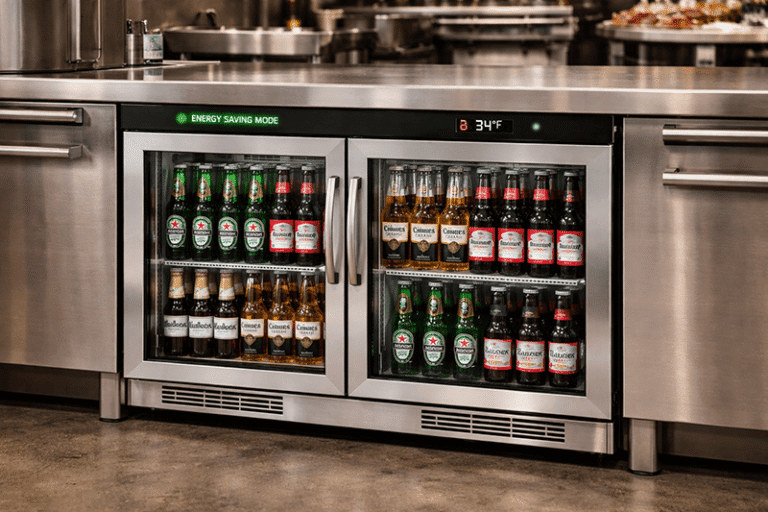
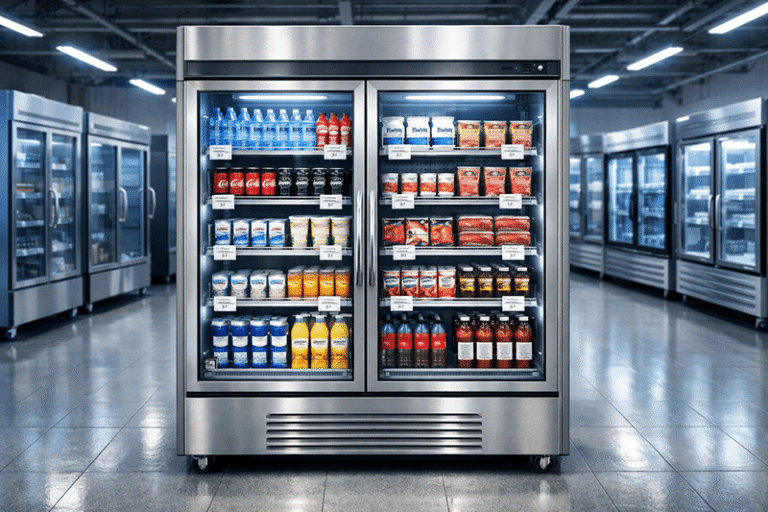
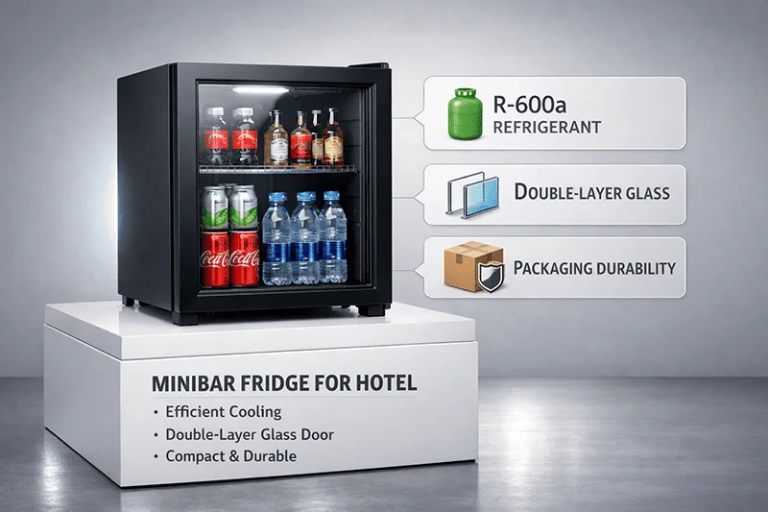
Are you struggling to select a commercial display fridge that boosts sales while meeting strict operational demands? Choosing wrong means wasted floor space, high energy bills, and lost product visibility.
A commercial display fridge is a purpose-built refrigeration unit designed to store products at safe temperatures while maximizing visibility and impulse sales in retail and foodservice environments.
Display refrigeration is no longer just about cooling. In 2026, buyers must balance merchandising impact, energy efficiency, compliance, and long-term supply reliability.
What Is a Commercial Display Fridge?
Are you unsure whether a display fridge differs from a standard commercial refrigerator? Many buyers underestimate the strategic role of display refrigeration.
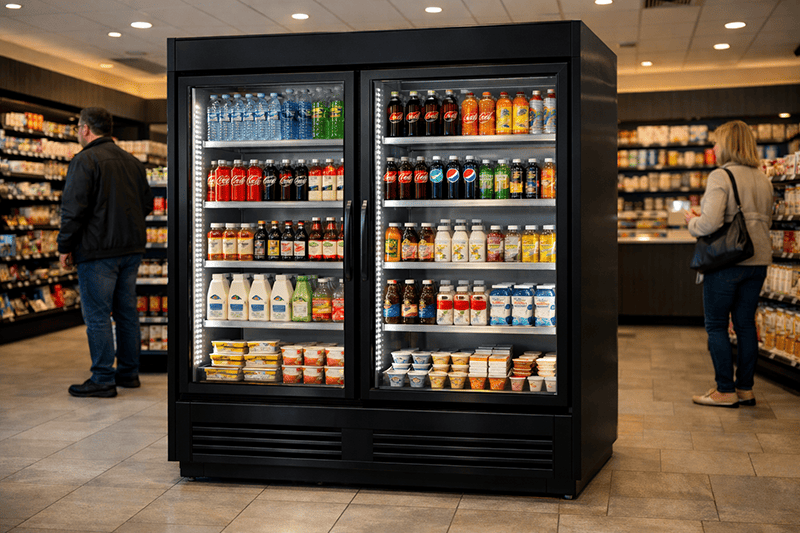
A commercial display fridge combines refrigeration, glass visibility, and merchandising design to showcase food or beverages while maintaining controlled temperatures for commercial use.
Unlike storage-only units, display fridges are engineered to attract customers, improve product turnover, and support branding. They commonly feature glass doors, LED lighting, adjustable shelves, and front-facing designs. For retailers and foodservice operators, the display function directly impacts revenue per square meter.
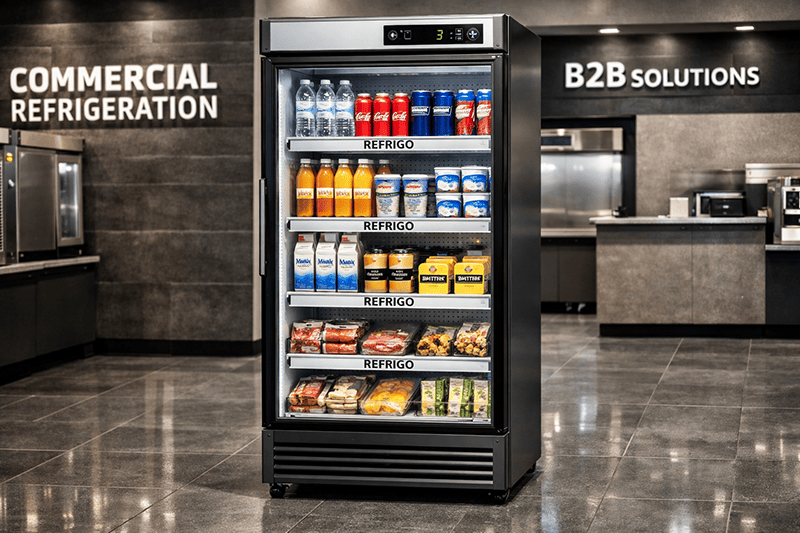
Key Functional Characteristics
- Transparent glass doors or open fronts
- Temperature stability for frequent door openings
- Enhanced airflow for uniform cooling
- Visual merchandising features
Commercial Display Fridge vs Standard Commercial Refrigerator
Are you comparing prices without understanding functional differences? This often leads to buying storage equipment that fails to drive sales.
Commercial display fridges prioritize product visibility and customer access, while standard commercial refrigerators focus on bulk storage and operational efficiency.
The commercial value of a display fridge lies in its ability to influence purchasing behavior. Glass doors, lighting, and ergonomic height placement are designed to convert foot traffic into sales.
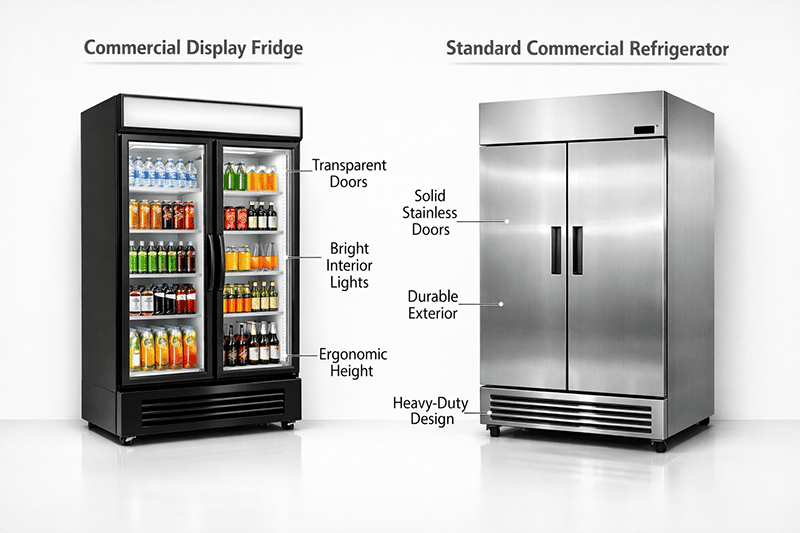
Comparison Table
| Feature | Display Fridge | Standard Commercial Refrigerator |
|---|---|---|
| Primary Purpose | Merchandising & sales | Storage |
| Door Type | Glass / Open front | Solid |
| Customer Access | High | Low |
| Energy Load | Optimized for frequent access | Optimized for closed use |
Main Types of Commercial Display Fridges
Are you selecting a model based only on appearance? The wrong type leads to inefficient layouts and mismatched capacity.
Commercial display fridges come in multiple configurations designed for different merchandising strategies, product categories, and floor space constraints.
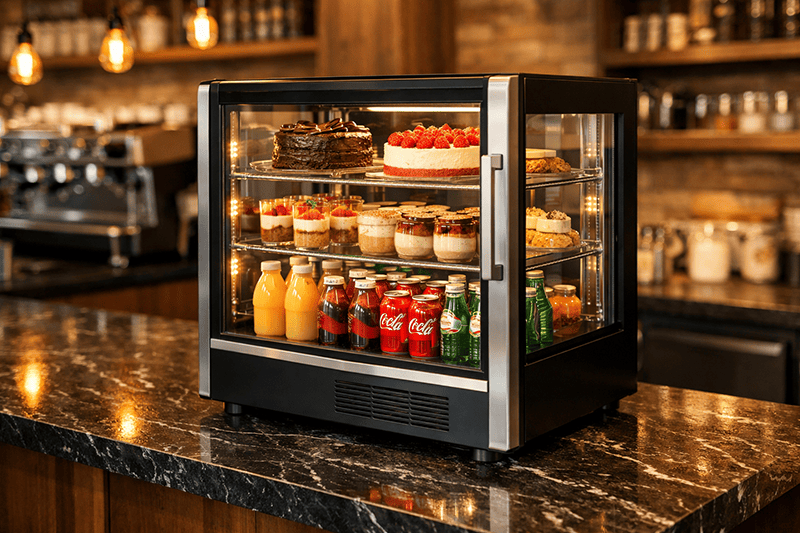
Common Categories Explained
| Type | Typical Capacity | Best Use Case |
|---|---|---|
| Upright Glass Door Display Fridge | 200–2000 Liters (7–71 Cu.Ft) | Beverage & packaged food |
| Double Door Merchandiser Refrigerator | 600–1400 Liters (21–49 Cu.Ft) | Supermarkets |
| Open Front Display Fridge | 150–500 Liters (5–18 Cu.Ft) | Grab-and-go retail |
| Countertop Display Refrigerator | 15–120 Liters (0.5–4.2 Cu.Ft) | Cafés & impulse items |
Each type differs in airflow design, insulation thickness, and merchandising efficiency. Selecting correctly ensures higher product rotation and lower operating cost.
Key Specifications Buyers Should Check Before Purchasing
Are you focused only on size and price? Ignoring technical specs leads to compliance risks and long-term inefficiency.
Key specifications define performance, energy consumption, and regulatory compliance of a commercial display fridge.
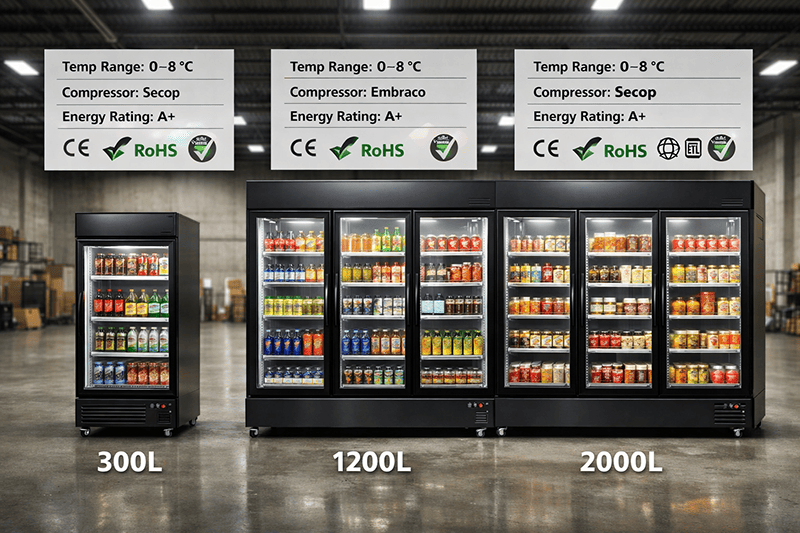
Core Technical Parameters
| Specification | Recommended Range |
|---|---|
| Temperature Range | 0–8 °C (32–46 °F) |
| Capacity | 300–2000 Liters (10–71 Cu.Ft) |
| Compressor | Secop / Embraco equivalent |
| Energy Efficiency | Class A or higher |
| Certifications | CE, ETL, NSF, Energy Star |
Compliance with international standards such as CE (EU), ETL (North America), and NSF ensures legal market access. For energy benchmarks, reference Energy Star guidelines: See Source.
Commercial Display Fridge Applications by Industry
Are you unsure which display fridge fits your business model? Application-driven selection prevents over- or under-investment.
Different industries require tailored display fridge designs to match customer behavior and product turnover.
Industry Matching Guide
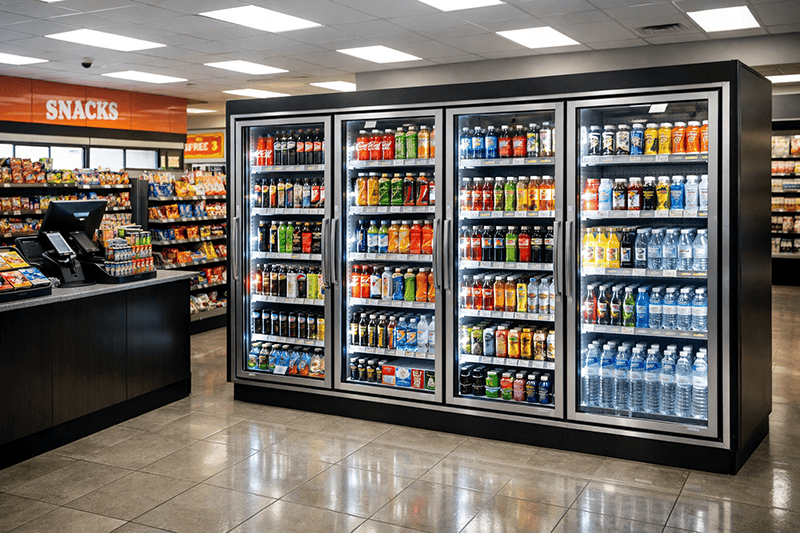
- Convenience Stores: Upright glass door fridges for beverages
- Supermarkets: Multi-door merchandiser refrigerators
- Restaurants & Cafés: Countertop or back-bar display fridges
- Beverage Shops: High-visibility LED-lit display chillers
- Hotels & Catering: Large-capacity, stable-temperature units
Each environment demands different airflow patterns, shelf configurations, and durability standards.
How to Choose a Commercial Display Fridge Supplier or Manufacturer
Are you relying on traders without factory insight? This increases cost, risk, and quality inconsistency.
A reliable commercial display fridge supplier should offer manufacturing transparency, international certifications, and scalable production capacity.

Supplier Evaluation Checklist
- In-house production lines
- Export experience to your target market
- Compliance documentation support
- Stable component supply chain
- After-sales technical capability
Choosing a factory-direct manufacturer in China allows better cost control, customization, and long-term partnership stability.
OEM & ODM Commercial Display Fridge Solutions for Distributors
Are you competing on price alone? OEM and ODM strategies help you build brand differentiation.
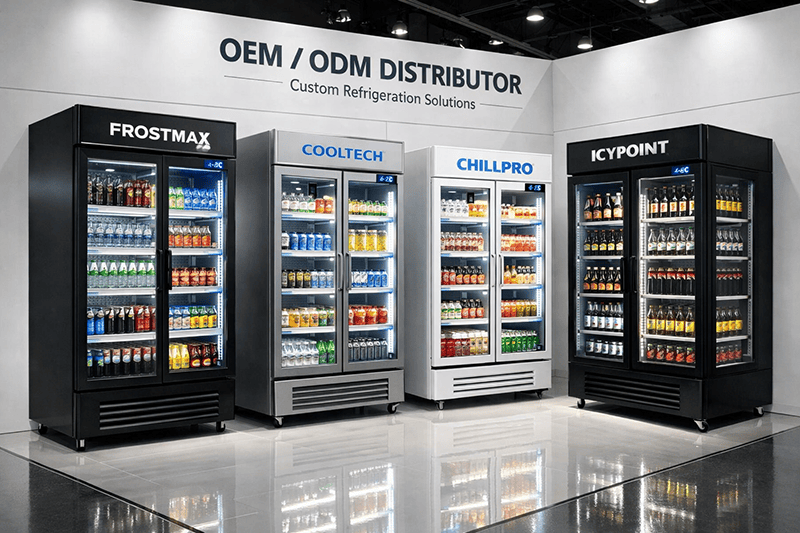
OEM and ODM commercial display fridge solutions enable distributors to customize design, branding, and technical specifications at scale.
Customization Options
- Logo & exterior color
- Shelf configuration
- Temperature zones
- Plug & voltage standards
- Packaging design
For distributors, private-label display fridges increase margin control and brand loyalty while leveraging factory manufacturing expertise.
Conclusion
Choosing the right commercial display fridge in 2026 is about visibility, compliance, and supplier strength. Work with a factory-level partner to secure performance, customization, and long-term competitiveness. Contact us to start your sourcing strategy today.