Choosing a refrigerator that fails in hot or cold environments leads to breakdowns, warranty claims, and unhappy customers. Many buyers only discover this issue after shipment—when it’s too late to fix.
A refrigerator climate class defines the ambient temperature range where a refrigerator can operate safely and efficiently. Choosing the correct climate class ensures stable cooling, longer lifespan, and fewer after-sales problems.

Ignore climate class, and you risk higher energy costs, unstable temperatures, and damaged brand reputation—especially in global B2B markets.
How Do Home Refrigeration Climate Classes SN, N, ST, and T Differ?
Many importers assume one refrigerator works everywhere. That assumption often leads to overheating compressors and failed cooling performance in warmer regions.
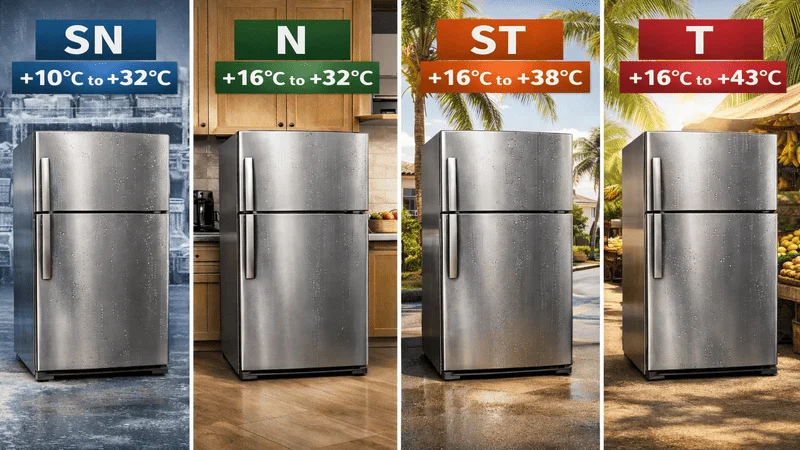
SN, N, ST, and T climate classes define specific ambient temperature ranges—from +10°C to +43°C—under which household refrigerators are tested and guaranteed to perform.
Ambient Temperature Ranges Explained
| Climate Class | Ambient Temperature Range |
|---|---|
| SN (Subnormal) | +10°C to +32°C |
| N (Normal) | +16°C to +32°C |
| ST (Subtropical) | +16°C to +38°C |
| T (Tropical) | +16°C to +43°C |
For commercial refrigeration, ST and T climate classes are essential in hot, humid, or poorly ventilated environments. These units feature upgraded compressors, larger condensers, thicker insulation, and improved airflow design to handle higher thermal loads. Selling an N-class refrigerator into a tropical market is one of the fastest ways to trigger failures and returns. However, for commercial display refrigerators, climate performance is often specified using a different classification system (climate class 0-8) that also considers humidity.
What Does Commercial Refrigeration Climate Class 0-8 Mean?
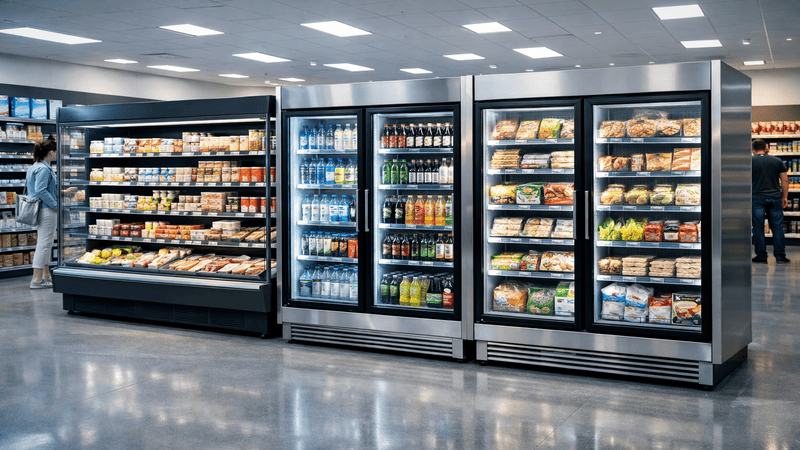
Are you sourcing commercial refrigeration equipment but unsure if climate class 0–8 matches real conditions? The wrong choice causes unstable temperatures, condensation problems, and higher long-term energy costs.
Unlike SN, N, ST, and T ratings that consider only ambient temperature, climate class 0–8 defines standardized test conditions combining specific temperature and relative humidity levels, ensuring commercial refrigeration equipment maintains stable cooling performance, energy efficiency, and food safety in real operating environments.
Climate Class 0-8 Overview (Temperature + Humidity)
| Climate Class | Dry Bulb Temperature | Relative Humidity | Typical Test Environment |
|---|---|---|---|
| 0 | 20 °C (68 °F) | 50% RH | Air-conditioned retail areas |
| 1 | 16 °C (61 °F) | 80% RH | Cool indoor commercial spaces |
| 2 | 22 °C (72 °F) | 65% RH | Standard supermarkets |
| 3 | 25 °C (77 °F) | 60% RH | Warm retail environments |
| 4 | 30 °C (86 °F) | 55% RH | Hot commercial locations |
| 5 | 40 °C (104 °F) | 40% RH | Very hot, dry environments |
| 6 | 27 °C (81 °F) | 70% RH | Warm and humid conditions |
| 7 | 35 °C (95 °F) | 75% RH | Extreme heat and humidity |
| 8 | 24 °C (75 °F) | 55% RH | Alternative reference condition |
This classification enables manufacturers, importers, and distributors to evaluate commercial refrigeration performance under clearly defined environmental stresses, ensuring technical data is comparable across different products, suppliers, and global markets.
Why Does Climate Class Directly Affect Refrigerator Performance and Lifespan?
Are you dealing with customer complaints about high energy bills or unstable cabinet temperatures despite “correct” specifications?
Operating beyond the rated climate class (SN/N/ST/T or applicable commercial climate class) increases compressor workload, raises energy consumption, causes temperature instability, and significantly shortens equipment lifespan.
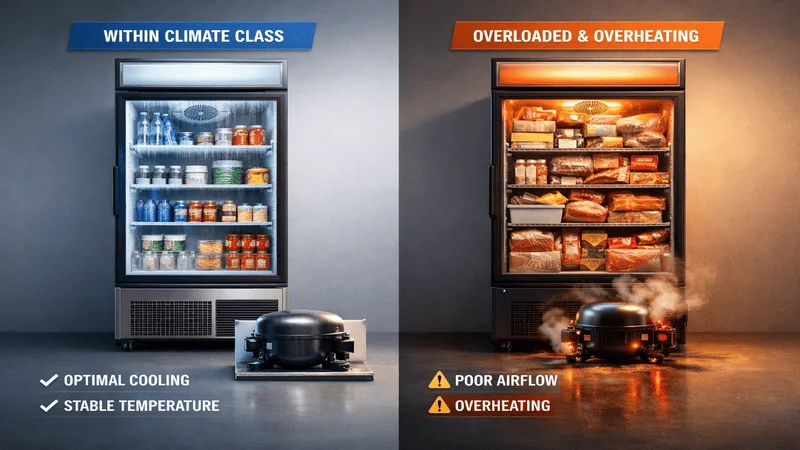
Compressor Load and Energy Efficiency
As ambient temperature rises:
- Heat rejection becomes less efficient
- Compressors run longer and harder
- Power consumption increases
- Internal cabinet temperatures fluctuate
In real-world commercial kitchens and retail stores, this leads to food safety risks and higher operating costs. Over time, continuous overloading accelerates compressor failure and increases maintenance frequency. From a procurement standpoint, the climate class is not just a technical label—it directly impacts total cost of ownership.
Which Refrigerator Climate Class Should You Choose for Different Markets?
Global distributors often sell the same model across multiple regions, only to face complaints in warmer countries.
Refrigerator climate class should always be selected based on the highest expected ambient temperature in the destination market—not average conditions. The following recommendations are based on SN/N/ST/T climate classes, which are commonly used for general refrigeration selection.
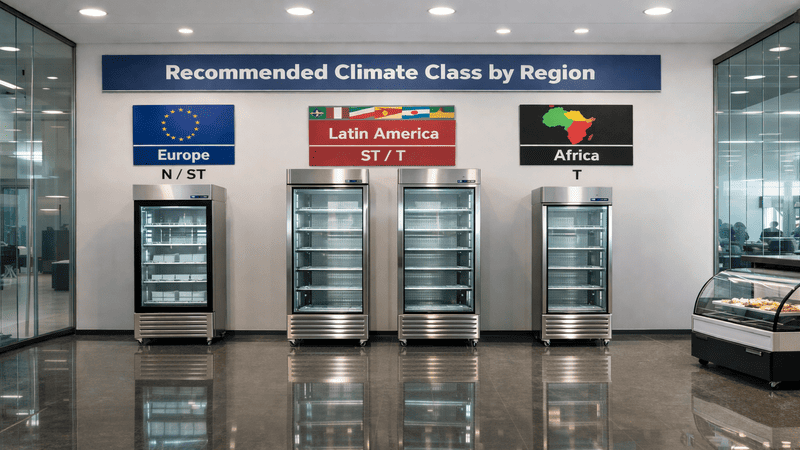
Recommended Climate Class by Region
| Market Region | Recommended Climate Class |
|---|---|
| Northern Europe | SN / N |
| Southern Europe | N / ST |
| Middle East | ST / T |
| Southeast Asia | T |
| Africa | ST / T |
| Latin America | ST / T |
Many professional buyers now standardize on ST or T-class refrigerators to reduce SKU complexity and minimize climate-related risk. While initial unit cost may be slightly higher, long-term reliability and lower service claims make it a smarter investment.
How Do International Standards Define Refrigerator Climate Class?
Without standardized testing, climate class ratings would be meaningless across manufacturers.
Refrigerator climate classes are defined by international standards that specify test temperatures, humidity, and operating conditions to ensure consistent performance validation.
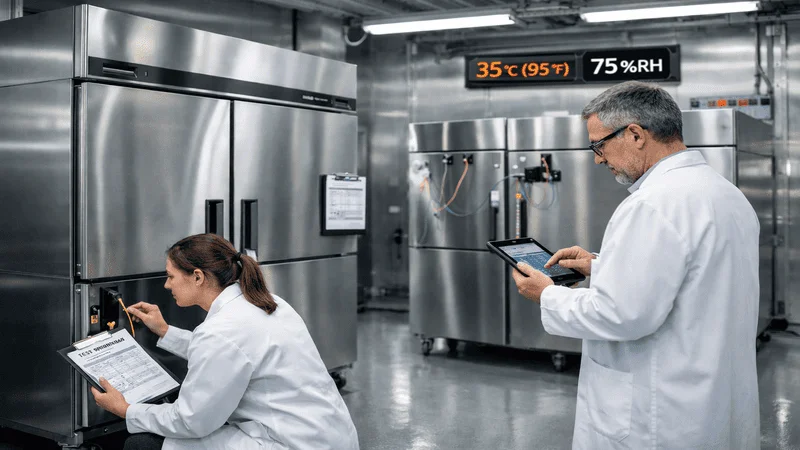
ISO and IEC Standardization
Climate class definitions are established under international appliance testing standards, including IEC 62552 for household & EN ISO 23953-2 for commercial use. Refrigerators are tested in controlled environments that simulate real ambient temperatures for each class. Only units that maintain stable internal temperatures and acceptable energy performance can be labeled with a specific climate class.
This standardization allows importers, distributors, and brand owners to compare products across suppliers with confidence—and protects buyers from exaggerated performance claims.
What Should Importers and Distributors Check Before Ordering?
Many procurement teams focus on capacity, dimensions, and price—while overlooking environmental suitability.
Before ordering refrigerators, buyers should verify climate class suitability, compliance documentation, and warranty coverage under rated operating conditions.
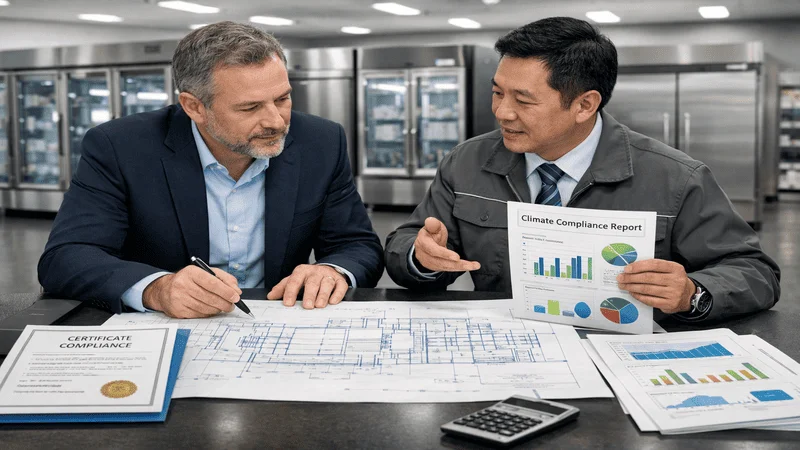
Procurement Checklist for Climate Class
- Confirm destination market’s maximum ambient temperature
- Select a climate class with sufficient safety margin
- Request test reports or compliance certificates
- Evaluate energy efficiency under high-temperature operation
- Ensure warranty validity within rated climate conditions
For B2B refrigeration projects, climate class selection is a strategic decision that affects performance, operating cost, and customer satisfaction long after installation.
Conclusion
Refrigerator climate class defines where your equipment succeeds—or fails. Choose correctly, and performance stays stable worldwide. Choose wrong, and problems multiply fast. Work with experienced suppliers to specify climate-ready refrigeration from day one.